
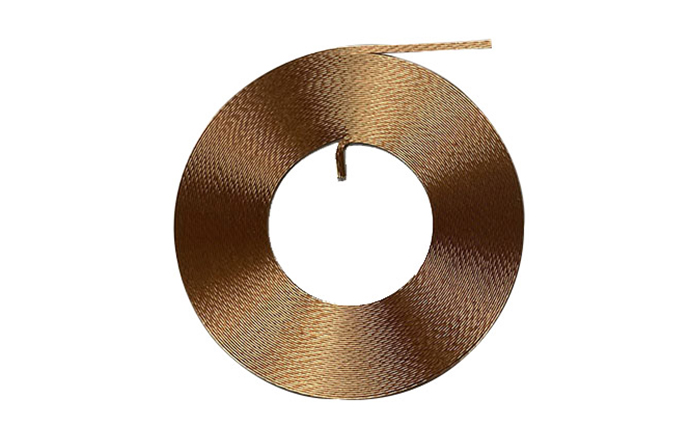
A wireless charging receiver coil is a component designed to receive electrical current transmitted by a wireless charging transmitter coil. When the transmitter coil emits current, the receiver coil captures this energy and transfers it to a storage terminal (e.g., a device battery). Key characteristics include:
Working Principle
Wireless charging relies on electromagnetic induction or magnetic resonance. The transmitter and receiver coils form a resonant system, enabling energy transfer through oscillating magnetic fields. This method reduces energy loss compared to wired charging and achieves higher efficiency (several percentage points higher than traditional methods).
Technical Challenges
Core Chip: Precision control of radiation range, magnetic field frequency, and other parameters is critical and requires advanced chip technology.
Safety: The magnetic fields used are harmless to humans, similar to natural electromagnetic waves. Public concerns about health risks (e.g., similar to early Wi-Fi or mobile antennas) are unfounded.
Impact on Daily Life
Wireless charging has simplified device charging. For example, smartphones with built-in receiver coils can charge by proximity to a transmitter (e.g., charging pads or power banks). Early designs required physical contact between transmitter and receiver coils, but advancements now allow true wireless energy transfer.
Future Prospects
Wireless charging may revolutionize industries like electric vehicles (dynamic road charging) and consumer electronics. Challenges remain, such as extending transmission distance and improving directional accuracy.
PREV:Preventive Measures for Inductor Coil Winding
NEXT:Common Coil Winding Characteristics and Application Scope





 Home
Home