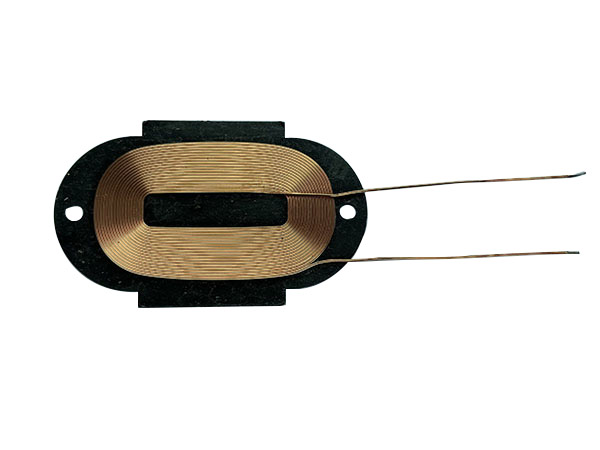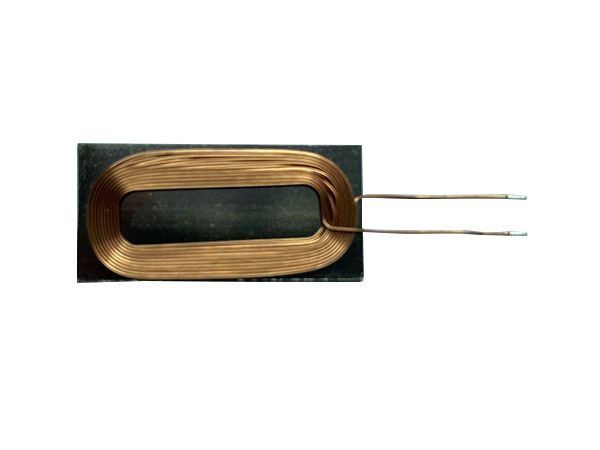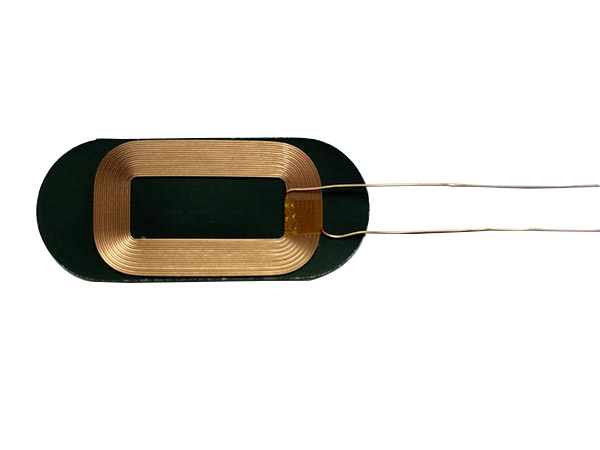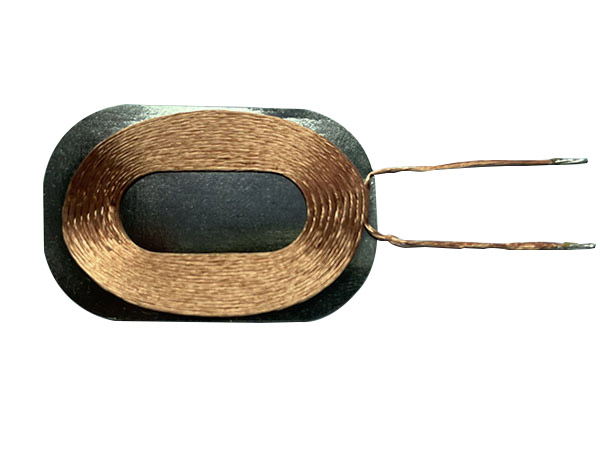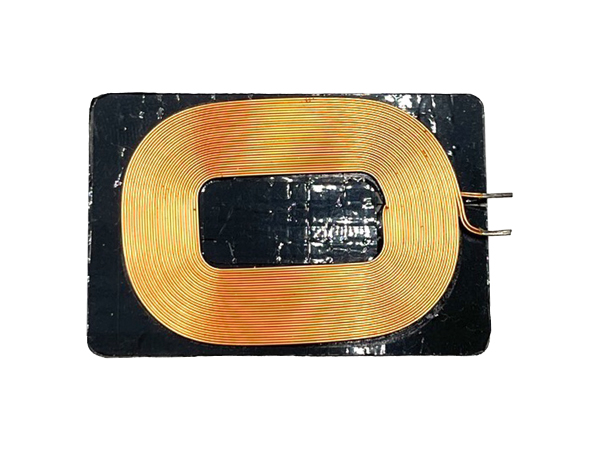


The application of wireless charging coils is becoming increasingly commercialized, with coils being used more widely. The principle of wireless charging technology is no longer a mystery and has already been commercialized in some smartphones. The principle is simple: the transmitting end converts electrical energy into electromagnetic waves and emits them, while the receiving end converts the electromagnetic waves back into electrical energy for charging. Currently, there are three different implementation methods: electromagnetic induction, radio wave, and magnetic resonance, each with its own advantages and disadvantages.
Electromagnetic induction uses two mutually inductive coils for wireless charging. When the current in the input coil changes, the magnetic field of the output coil changes accordingly, generating an induced current to transfer energy from the input to the output. This method requires the devices to be very close and allows only one-to-one charging, with the coils needing to be aligned. However, it has high energy conversion efficiency and a wide power transmission range, from a few watts to several hundred watts.
Radio wave charging involves receiving radio waves for wireless charging, similar to the principle of a crystal radio. However, this method has very low transmission power (up to 100 milliwatts) and low efficiency, with most energy wasted as radio waves. It has a slight advantage in transmission distance, reaching up to 10 meters.
Magnetic resonance charging uses electromagnetic resonance for wireless charging, similar to sound wave resonance. As long as two mediums share the same resonant frequency, energy can be transferred. The charging distance falls between electromagnetic induction and radio wave methods. Its advantages include higher transmission power (up to several kilowatts), the ability to charge multiple devices simultaneously, and no need for coil alignment. The drawbacks are high energy loss, which increases with distance and power, and the need for frequency band protection.
From the pros and cons of these three methods, it is clear that only electromagnetic induction and magnetic resonance are feasible for wireless charging in electric vehicles. However, which is superior depends on the market and consumer choice.




 Home
Home